Transition risk
Telescope provides a simple workflow for transition plans, enhancing asset value, sustainability, and reducing tenant costs.


Telescope provides a simple workflow for transition plans, enhancing asset value, sustainability, and reducing tenant costs.
With rising climate risks, the EU requires disclosures. Telescope helps you reduce risks and protect asset value.

Telescope helps you manage biodiversity, aligning your projects with ecosystem preservation.

Keep track of risk across entire portfolios with a birds-eye-view.

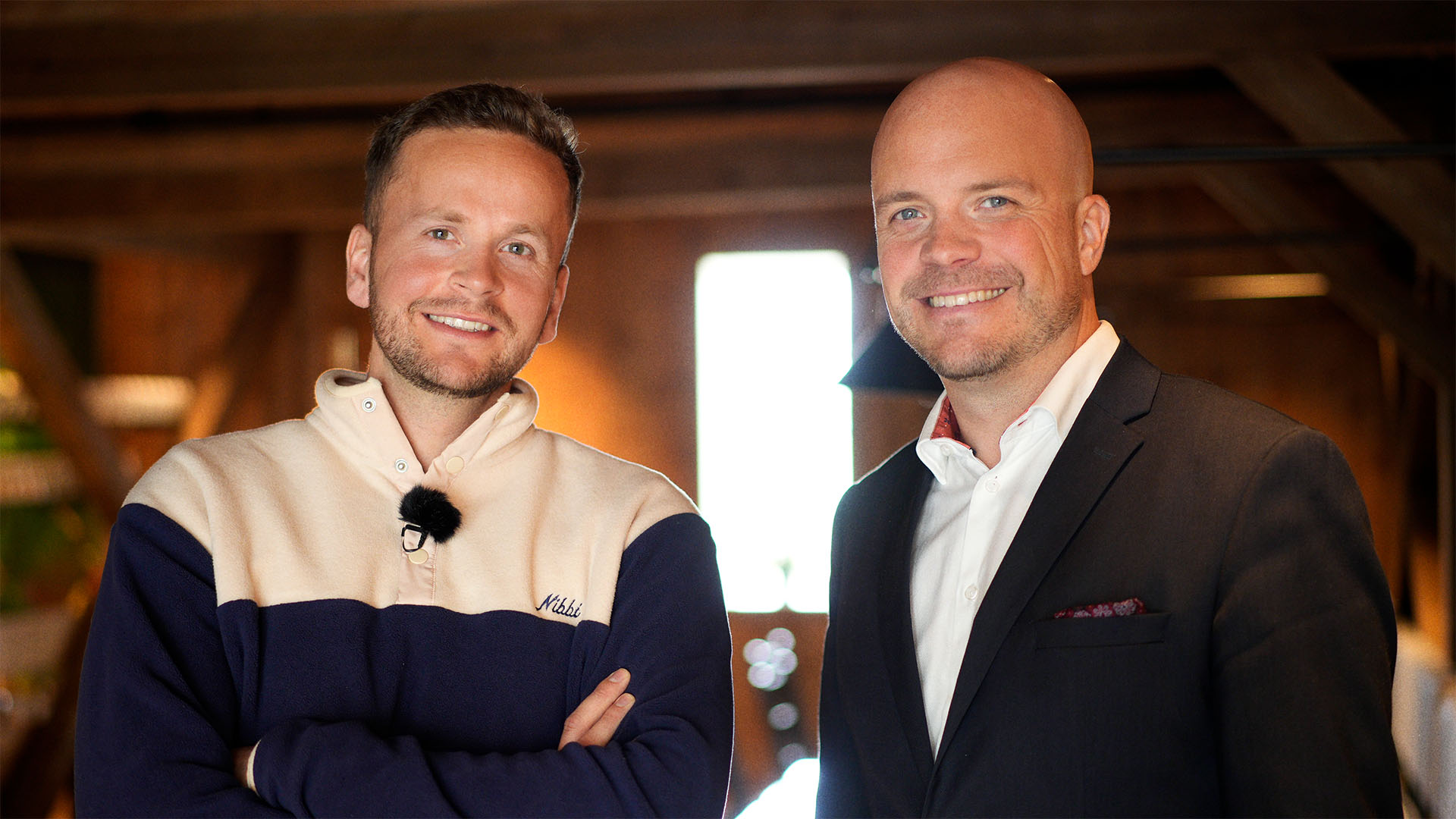
OBOS CFO Trond Stabekk shows how sustainability has become part of OBOS’s financial logic - not a separate reporting task. With a large balance sheet and more than half a million members, OBOS must balance regulation, climate risk, and affordability in every decision. Green financing helps, but the incentive is still far smaller than the real cost of going “dark green,” which makes prioritisation key. Measures must deliver real value without driving up housing costs. New environmental rules are already affecting land values, turning some long-held plots into limited or non-buildable assets. These risks are now financial, not theoretical. For OBOS, the way forward is clear: strong leadership, early decisions, and keeping sustainability grounded in business logic.
Last year was the year of reporting.
Across Europe, CFOs spent the better part of 2024 grappling with the CSRD, ESRS, and new sustainability indicators that reshaped financial planning.
Now, with the EU’s Omnibus update softening and clarifying those rules in early 2025, a new phase is emerging. The question has shifted from compliance to consequence:
What actually changes in the business when the reporting is done?
For OBOS CFO Trond Stabekk, the answer lies not in frameworks but in fundamentals.
“Reporting is just a tool to drive behavioural change. It’s not the goal itself,” he says.
Stabekk talks about sustainability the same way he talks about cash flow - as a matter of discipline and priorities.
And in one of Norway’s largest and most complex property companies, that discipline runs deep.
OBOS’s balance sheet sits around 140 billion kroner, with activities spanning housing development, banking, property management, and long-term investment. It’s a cooperative owned by its members - over half a million people - which adds a layer of social responsibility to every financial decision.
That combination makes sustainability a uniquely complex equation. It touches risk, capital allocation, and affordability all at once.
“We have to think about sustainability across every axis - from regulation to materials to financing,” says Stabekk. “But we also have to make sure it makes sense for our members. That’s the constant trade-off.”
In short: OBOS doesn’t view sustainability as a department or a moral stance. It’s a financial discipline.
Green loans do come with a benefit - typically 10–20 basis points cheaper than ordinary loans - but that modest greenium rarely covers the 5–8 percent cost increase that comes with going “dark green.”
“Green financing is a bit cheaper, but the margin difference is small compared to what it costs to go all-in on environmental specs,” Stabekk explains.
The economics are simple: the incentive exists, but it’s not yet strong enough to tip the scale.
“Our mission is to build homes people can afford. We must find the balance between meeting regulations, taking social responsibility, and avoiding costs that don’t give real effects.”
So for OBOS, green finance is useful, but not decisive.
The company sees it as one part of a broader puzzle - a tool, not a strategy.
OBOS’s member-owned model makes affordability non-negotiable.
Every sustainability decision must fit within that boundary.
“If upgrades lift unit cost beyond what members can absorb, then dark green loses to good enough,” Stabekk says.
That constraint forces sharper prioritisation. Instead of chasing the latest label, OBOS focuses on measures that deliver real-world outcomes - lower emissions, higher efficiency, better long-term value. It’s a pragmatic view, but also a protective one.
As construction costs rise and interest rates stay high, the company’s approach ensures sustainability doesn’t become a luxury item.
“A sustainable home must also be an affordable home,” he adds.
For a company that holds land across Norway, sustainability is also about managing real risk.
Some plots were acquired 10 or 20 years ago - long before biodiversity, stormwater management, and nature-risk zones became part of planning law.
Today, those same rules can turn valuable land into locked assets.
“In the worst case, a site we’ve invested hundreds of millions in could have zero buildable value,” says Stabekk.
Take one coastal plot, for instance. Once a strategic expansion area, it’s now partly restricted by new environmental criteria. “That’s not politics,” Stabekk says. “That’s physics.”
The lesson? Sustainability risk is no longer theoretical - it’s financial, physical, and measurable.
Regulation is important, but it’s not where the real progress happens.
For OBOS, the key to navigating uncertainty is decisive leadership.
“The most important thing is leadership and execution. You can’t analyse forever. You have to make choices and move.”
That mindset - pragmatic, analytical, and long-term - reflects OBOS’s dual identity: both developer and bank, both social actor and business.
As Stabekk sees it, the challenge now isn’t knowing what to report, but deciding what to prioritize.
OBOS’s approach captures a broader shift in the real estate industry: sustainability is entering its operational era - where decisions hinge on data, discipline, and risk rather than declarations.
At Telescope, that’s exactly where we focus. We help companies turn complex climate data into decision-ready insight - from understanding flooding and landslide risk to mapping biodiversity exposure.
Because when sustainability becomes a financial discipline, the missing piece is data you can trust.
That’s how companies like OBOS can balance regulation, affordability, and long-term resilience - and keep sustainability grounded in business logic.